Cancer leaves a devastating imprint on nearly every family. Yet, tech executives increasingly make a bold, almost reckless promise: artificial intelligence will eradicate this complex set of diseases within the next five to ten years. This timeline is entirely disconnected from clinical reality. The narrative of algorithmic salvation ignores the fundamental constraints of human biology and the structural failures of the pharmaceutical industry.
The Hubris of Technosolutionism in Modern Medicine Silicon Valley operates on a core dogma that sufficient computational power can engineer away any human suffering. We call this technosolutionism. It frames oncology as a mere data routing issue. Tech leaders repeatedly storm the gates of healthcare armed with massive neural networks, assuming their outsider status is an asset rather than a liability. They mistake execution challenges for a fundamental lack of medical understanding.
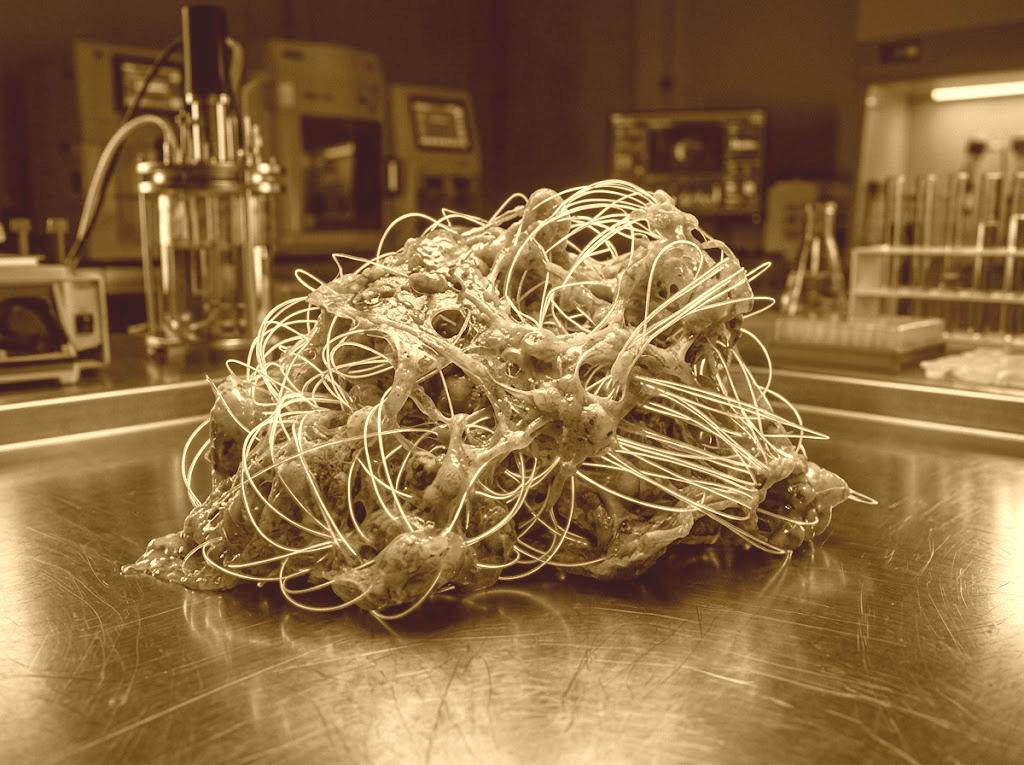
When "Move Fast Collides" with Clinical Reality The collision between software development and medicine is a clash of opposing philosophies. Software engineers live by the ethos of "move fast and break things." Doctors are bound by primum non nocere—first, do no harm. You cannot beta-test an oncology drug on human lives. Rushing an algorithm into a software update causes a temporary glitch. Rushing an unverified chemical compound into clinical trials causes irreversible damage. Over a decade of heavy AI investment in drug discovery has yielded exactly zero clinically adopted, purely AI-designed drugs. The medical system demands a level of empirical rigor that code alone cannot bypass.
The Biological Barrier is The Reason Why Language Models Fail at Chemistry A neural network trained on the entirety of human literature is exceptional at predicting the next word in a sentence. It is remarkably poor at predicting how a novel molecule will interact with a mutated protein inside a living cell. Human language follows grammatical rules invented by humans. Cellular biology follows the chaotic, emergent laws of physics and chemistry.
The Translational Gap and The 92% Failure Rate from Mice to Men Consider the sheer complexity of the human organism. We are composed of trillions of interacting molecules, possessing vast phenotypic variation across populations. Algorithms frequently design compounds that successfully shrink tumors in mice, only to exhibit lethal toxicity or zero efficacy in human subjects. Roughly 92% of drugs that pass animal testing fail in human trials. This is the translational gap. We do not yet possess the biological mapping required to train an AI on what makes a human body react differently from a murine model. An algorithm is only as good as its training data. Today, our data on human disease biology remains profoundly incomplete.
The Broken Economics of Drug Discovery Even if a supercomputer generated the perfect chemical structure to eradicate a specific tumor, the battle is less than half won. The pharmaceutical market dictates which cures reach patients. Here, we encounter Eroom’s Law, the observation that drug discovery becomes slower and more expensive over time, despite exponential improvements in technology.
Patent Clocks, Rare Diseases, and Unprofitable Cures Science often takes a backseat to market forces. Antibiotics provide a clear case study. A highly effective new antibiotic must be heavily restricted to prevent bacterial resistance. Restricted use means low sales volume, rendering the research inherently unprofitable. A similar fate awaits treatments for rare diseases or drugs facing imminent patent expiration. If the intellectual property clock runs out before a company can recoup its clinical trial costs, the drug is abandoned regardless of its clinical efficacy. A perfect algorithm cannot fix a broken economic incentive structure.
Redefining the True Value of AI in Healthcare Rejecting the ten-year cure timeline does not mean dismissing AI. It requires recalibrating our expectations. The path forward demands causal and biologically sophisticated architectures, not just large language models predicting text sequences. AI must transition from an oracle expected to hand down miracle cures into an industrial workhorse.
Incrementality Over Magic Bullets The actual revolution will be quiet and incremental. Machine learning is uniquely suited for tasks like identifying novel biomarkers, optimizing the logistical flow of clinical trials, and predicting patient stratification. It will help researchers filter out dead-end compounds months earlier, saving billions of dollars. Beating cancer requires deep, systemic changes to both our economic models and our biological understanding. AI is a powerful instrument in that effort. It is not a standalone savior.